
High-Quality Loading Dock Ramp Solutions
Some facilities load from a proper elevated dock. Plenty of others don’t — ground-level warehouses, temporary sites, container yards, places where building a permanent dock was never in the plan. That is where a Loading Dock Ramp comes into play. It consists of an inclined steel construction that links the space between the ground and the truck bed or the floor of the container to allow the forklift to go up smoothly without anyone trying to build any ramp from wooden planks.
There are two varieties of ramps available depending on the nature of work at site. Some facilities need something that moves — repositioned from bay to bay, or between vehicles parked at different spots on a lot. Others need something bolted down permanently at one loading point and never touched again. We build both, and honestly, which one’s right for you usually comes down to how your site actually runs day to day rather than any fixed rule.
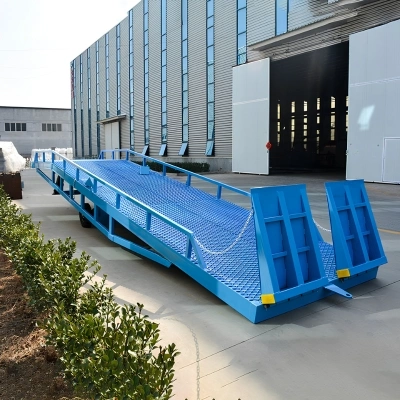
Key Features

Heavy-duty steel construction, built to handle repeated forklift and pallet jack traffic without flexing or wearing thin
Anti-skid surface finish across the full ramp length, so wet or dusty conditions don’t turn into a slip hazard
Adjustable incline to accommodate different truck bed and container heights

Safety curbs along both edges, keeping wheels from sliding off during loading
Reinforced load-bearing frame rated for industrial-weight cycling, not occasional light use
Available in configurations suited to both permanent installation and site-to-site portability
Applications
Loading dock ramps show up in more places than people initially expect. Ground-level warehouses without a raised dock rely on them as the primary way trucks get loaded at all — without a ramp, there’s simply no clean way to bridge that height gap. Container yards and logistics parks handling shipping containers directly benefit too, since container floors sit at a specific height that a ramp handles cleanly.
Construction sites and temporary industrial setups lean on ramps heavily, since building permanent dock infrastructure for a site that might not exist in two years rarely makes financial sense. Distribution centers running overflow loading points during peak season also turn to ramps as a flexible way to add capacity without a full construction project. And plenty of established facilities keep a ramp around simply as a backup — for the day a permanent leveler is down for maintenance and trucks still need to get loaded.
The common thread across all of it: whenever there’s a height gap between the ground and a vehicle bed, and building permanent dock infrastructure isn’t practical or necessary, a loading dock ramp is the straightforward answer.

Why Choose Us
- We manufacture the full steel structure in-house, so there's no inconsistency between batches or fabricators
- Ramps built to handle daily industrial cycling, not just the occasional light delivery
- Safety detailing — curbs, anti-skid surface, stable framing — included as a baseline, not sold as upgrades
- Flexible enough to configure around your specific site, whether that's one fixed loading point or several shifting ones
- A team that helps you figure out which ramp type actually fits your operation, instead of just pushing whichever one's easiest to sell
- Support that continues well past the installation date
Frequently Asked Questions
What's the difference between a loading dock ramp and a dock leveler?
A dock leveler bridges a smaller gap at an existing elevated dock. A loading dock ramp handles a much larger height difference, typically from ground level up to a truck bed or container floor.
Do I need a fixed or portable ramp for my facility?
It depends on whether your loading point stays in one place or shifts around your site. Fixed ramps suit a single permanent location; portable ramps suit sites needing flexibility across multiple points.
What weight capacity do loading dock ramps handle?
They’re built for industrial-grade forklift and pallet jack traffic, with capacity matched to your typical load — we size this around your actual operational needs rather than a single fixed rating.
Can a loading dock ramp be used outdoors?
Yes, they’re built from heavy-duty steel with an anti-skid finish specifically to hold up under outdoor and variable-weather conditions.