
High-Quality Telescopic Dock Leveler Solutions
Trucks don’t always park where you’d like them to. Some pull in at an angle, some sit a little higher or lower than expected, and a standard hinged-lip leveler can only reach so far before it stops making solid contact.
That’s the exact problem a Telescopic Dock Leveler was designed around — instead of a short lip that just swings down, the lip extends outward mechanically, stretching to meet the truck bed no matter how the vehicle ends up sitting.
It sounds like a small mechanical difference, but on a busy dock handling all kinds of vehicles, it changes a lot. No more forklifts inching over an unstable overhang because the lip didn’t quite reach.
No more operators eyeballing whether a truck backed in close enough. The platform just adjusts to the reality of where the truck actually is.
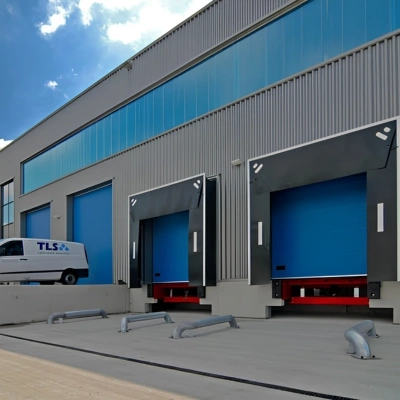
Telescopic Dock Leveler for Flexible Loading Operations
A Telescopic Dock Leveler Facilitates Easy Loading & Unloading A Telescopic Dock Leveler removes the challenge faced by the operator when a truck arrives at the dock of various sizes and may not always halt at the same height or position. Its telescoping lip slides forward of the truck’s bed and forms a secure route between the dock and the truck.
The extended lip bridges the gap between truck and dock. This allows pallet trucks, forklifts, and trolleys to transfer cargo comfortably and securely between the truck and the warehouse. It is an ideal solution when a truck enters at some distance from the dock or at an angle.
It works on a straight forward hydraulic push-button system that mobilizes the lip and the platform of the unit. The platform of the Dock Leveler is manufactured using high-grade steel and possesses an anti-slip surface for routine forklift use. Hydraulic overload protection and emergency stop enhance safety during loading and unloading.
A Telescopic Dock Leveler is advantageous for warehouses, logistics, distribution, manufacturing units, and other dock areas. It is a great option for locations where trucks differ in size and may not always halt at a uniform height or position at the dock.
Key Features
Extending lip mechanism that reaches further than a standard hinged lip, covering wider or uneven gaps

Hydraulic control for both the platform lift and the lip extension — one push-button cycle handles it all
Heavy-duty steel deck with an anti-skid finish, built to take repeated forklift traffic
Overload protection and emergency stop built into the standard system
Handles inconsistent dock approach angles better than fixed-lip alternatives
Reduces strain on the platform itself, since the lip makes full contact instead of a partial, unstable one
Applications
A Telescopic Dock Leveler earns its keep specifically where vehicle variability is part of daily reality. Logistics hubs that see everything from small delivery vans to large multi-axle trailers benefit immediately, since one leveler adapts across that whole range instead of struggling with anything outside a narrow spec.
Distribution centers with docks that were never built around a single standard vehicle also do well here — older facilities especially, where the dock design predates whatever fleet is actually using it today.
It also makes sense for operations where drivers can’t always back in perfectly, whether that’s due to space constraints in the yard, tight maneuvering angles, or simply high turnover meaning not every driver knows the site well. Rather than losing time (and safety margin) to imperfect parking, the Telescoping Lip absorbs that variability directly.
If your dock sees the exact same truck, at the exact same height, every single day without exception, a standard hinged-lip leveler is probably sufficient and there’s no need to pay for extra reach you’ll never use.
But that’s a narrower case than most people assume — and if there’s any real variability in what backs up to your dock, this is the leveler built for it.

Why Choose Us
- We don't outsource fabrication — every unit is built start to finish under one roof
- Engineered specifically for facilities dealing with mixed vehicle sizes, not a one-truck-fits-all assumption
- Reduces the operational guesswork of whether a truck "backed in close enough"
- Structured for daily industrial cycles, not occasional or light use
- Safety mechanisms come standard, not bundled as a pricier add-on tier
- A team that stays involved after installation for servicing, not just at the point of sale
Frequently Asked Questions
How is a telescopic dock leveler different from a standard dock leveler?
Its lip actually extends to get to the truck bed, opposed to it having a fixed hinge point that swings down, this means it can cover more space or gaps that a standard lip could only partially cover.
Is the lip extension automatic, or does it need manual adjustment?
It’s controlled through the same hydraulic push-button panel as the platform lift — no separate manual step required.
What kind of facility actually needs this over a standard leveler?
Anywhere handling a mix of vehicle sizes or inconsistent parking angles gets the most value — logistics hubs and multi-tenant distribution centers especially.
Does the telescopic design compromise load capacity or durability?
No — the structural build and safety systems match our standard hydraulic range. The difference is purely in how far and how the lip reaches, not the platform’s strength